
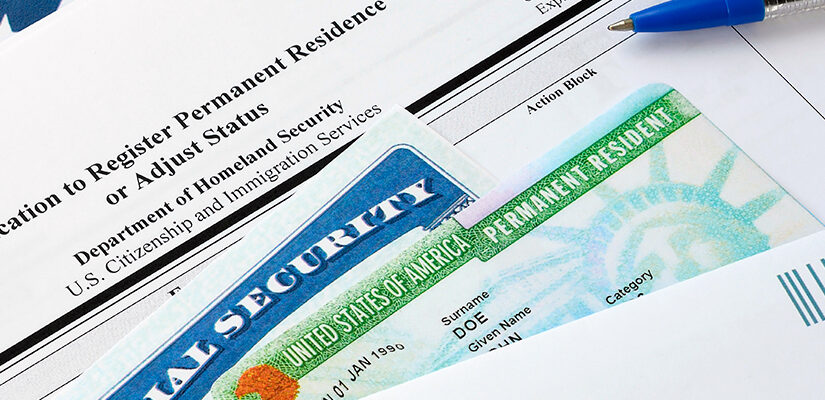
Getting married is a big step. So is getting your Green Card through marriage. But if you were married less than two years when your Green Card got approved, you received what is called a conditional Green Card. This card only lasts two years. Then you must file Form I-751 to keep your Green Card status. Many people find removing conditions on Green Card status confusing and stressful. Plus, missing the deadline causes serious immigration problems. So understanding the conditional Green Card renewal process now saves you from future headaches. In fact, thousands of couples each year must go through this same process. Also, knowing your 2-year Green Card rules helps you avoid costly mistakes. This guide walks you through everything you need to know about Form I-751 and removing conditions on your Green Card.
Need help with your case in Houston?
The 90-day I-751 window is unforgiving. Our Houston office calendars it and files joint petitions and waivers. See our removal of conditions page or call (713) 527-9606. English and Spanish.
Table of Contents
- What Is a Conditional Green Card
- Understanding the 2-Year Green Card Rules
- How Removing Conditions on Green Card Works
- When to File Your I-751 Form
- What Documents You Need for Conditional Green Card Renewal
- Joint Filing vs Waiver Options
- Processing Times for Form I-751
- What Happens After You File
What Is a Conditional Green Card
A conditional Green Card looks almost identical to a regular Green Card. But it has one major difference. Your card expires after just two years instead of ten years. So why do some people get conditional status? The answer is simple. USCIS issues conditional Green Cards to prevent marriage fraud. If you were married less than two years when USCIS approved your Green Card, you get conditional status. This two-year period lets immigration officials verify your marriage is real.
The conditional Green Card gives you most of the same rights as a regular permanent resident. You can work anywhere in the United States. Also, you can travel outside the country with proper documentation. Plus, you have legal protection under U.S. law. But there is one critical limitation. Your status automatically ends when your card expires. So you cannot just renew a conditional Green Card like you would a regular one.
Many people confuse removing conditions with simple Green Card renewal. The I-751 form process requires much more than a basic renewal. You must prove your marriage was genuine from the start. Then you show your marriage is still going strong today. This process converts your temporary status into permanent status. Our Houston Green Card lawyer team specializes in helping couples navigate this complex renewal process.
Your conditional Green Card shows the letters “CR1” on it. Regular permanent resident cards show “IR1” instead. So check your card to see which type you have. The expiration date matters too. Look at the front of your card. Then find the date listed under “Resident Since.” Add exactly two years to that date. That tells you when your conditional status expires.
Pro Tip: Take photos of both sides of your conditional Green Card before filing Form I-751. Store these copies in a safe place. Then you have backup documentation if anything gets lost during the application process.
Understanding the 2-Year Green Card Rules
The two-year rule applies to all marriage-based Green Cards where the couple was married less than two years at approval. But when exactly does USCIS measure those two years? For people who adjust status inside the United States, USCIS counts from your approval date. For people who go through consular processing abroad, USCIS counts from the day you enter the United States on your immigrant visa. So your entry date matters more than your interview date.
This rule exists to fight immigration fraud. USCIS wants to see that couples stay married for at least two years. Plus, they want proof that the marriage is real and ongoing. The conditional period acts as a test. During these two years, you must build a life together with your spouse. Then you document that shared life when removing conditions on your Green Card.
Some couples try to time their Green Card application to avoid conditional status. But this strategy can backfire badly. Waiting too long might mean missing out on important opportunities. Also, timing games sometimes raise red flags with immigration officers. Immigration attorneys usually advise filing when you are ready. Then deal with the conditional status if needed.
The 2-year Green Card rules apply even if you have children together. So having kids does not exempt you from filing Form I-751. Your children who got conditional status through your marriage must be included on your petition. Then their conditions get removed when yours do. This keeps the whole family on the same immigration timeline.
Common Mistake to Avoid: Never assume your conditional Green Card will automatically convert to a permanent one. You must file Form I-751 to remove conditions. Without this filing, your status ends when your card expires.
How Removing Conditions on Green Card Works
Removing conditions on your Green Card happens through a legal process called “Petition to Remove Conditions on Residence.” This process proves to USCIS that your marriage is genuine. Form I-751 is the official document you use for this petition. Most people file this form together with their U.S. citizen or permanent resident spouse. This joint filing shows you are still married and living together.
The Form I-751 asks many questions about your marriage. You must list your current address and employment. Also, you provide details about your spouse and your relationship history. Plus, you attach extensive documentation proving your marriage is real. USCIS reviews all this information carefully.
After you file Form I-751, USCIS sends you a receipt notice. This notice extends your conditional Green Card for 48 months. So you can keep working and living in the United States legally. Your expired conditional Green Card plus the receipt notice together prove your valid status. Then you wait for USCIS to process your petition.
Many conditional Green Card renewal cases require a biometrics appointment. USCIS schedules this appointment to take your fingerprints and photo. Usually this happens within two months of filing. You must attend this appointment. Missing it causes delays or even denial of your petition.
Some cases also require an interview. USCIS decides whether to waive the interview based on your documentation. Strong evidence often means no interview needed. But USCIS has increased interviews lately. So prepare for the possibility of answering questions about your marriage. Our Houston immigration attorneys help couples prepare for these interviews thoroughly.
Required Evidence Categories
You need to submit several types of evidence when removing conditions on Green Card status. Financial documents show you share money responsibilities. Joint bank account statements work well. Also, joint credit card statements help. Plus, joint tax returns prove financial partnership.
Residential evidence shows you live together as a married couple. Joint lease agreements are strong proof. So are mortgage documents with both names. Utility bills addressed to both spouses at the same address also help. Insurance policies listing each other work too.
Personal evidence demonstrates your real relationship. Wedding photos show your marriage ceremony. Also, vacation photos together prove ongoing partnership. Family photos with both sets of relatives help. Plus, birth certificates of children born during the marriage provide powerful evidence.
When to File Your I-751 Form
Timing is critical when removing conditions on your Green Card. You must file Form I-751 during the 90-day window before your conditional Green Card expires. This filing window opens exactly 90 days before your expiration date. Then it closes on your expiration date itself. Filing too early gets your petition rejected. Also, filing too late terminates your status.
How do you calculate your 90-day filing window? Look at your Green Card expiration date. Count back 90 days from that date. That earlier date is the first day you can file. For example, say your card expires on July 15, 2026. Then you can file starting April 16, 2026. You must file by July 15, 2026 at the latest.
The USCIS filing calculator helps you find your exact 90-day window. This online tool takes your expiration date. Then it calculates your earliest filing date automatically. Using this tool prevents timing mistakes.
Some people miss their filing deadline due to circumstances beyond their control. Medical emergencies, natural disasters, or other serious problems might prevent timely filing. In these cases, you can file late with a written explanation. But USCIS only accepts late filings for extraordinary circumstances. So never count on this exception. Always try to file on time.
Filing during your 90-day window protects your immigration status. Your receipt notice extends your conditional Green Card automatically. This extension lasts 48 months from your original expiration date. So you maintain legal status while USCIS processes your petition. This protection matters for work authorization and travel.
Key Takeaway: Mark your filing deadline on your calendar six months early. Then start gathering documents. This gives you plenty of time to prepare a strong I-751 petition.
What Documents You Need for Conditional Green Card Renewal
Gathering the right documents is crucial for removing conditions on Green Card status successfully. Form I-751 itself requires both spouses’ signatures. So both of you must sign and date the form before mailing. Then make copies of the signed form for your records. Keep these copies in a safe place.
You must include a copy of your conditional Green Card. Copy both the front and back of your card. Make sure the copies are clear and readable. Also, if you are including children in your petition, copy their Green Cards too. Each family member needs their card copied.
Financial documents prove you share financial responsibilities. Include joint bank account statements from the past two years. Show statements from different months. Also, add joint credit card statements if you have them. Tax returns filed jointly work extremely well. Plus, evidence of jointly owned property strengthens your case.
Proof of shared residence shows you live together. Joint lease agreements with both names demonstrate this clearly. So do mortgage documents showing joint ownership. Utility bills addressed to both spouses help. Also, insurance policies listing each other as beneficiaries provide strong evidence. Mail addressed to both of you at the same address works too.
Relationship evidence documents your genuine marriage. Wedding photos and invitations show your marriage ceremony. Family photos with both sets of relatives demonstrate integrated families. Plus, vacation photos together prove ongoing partnership. Birth certificates of children born during your marriage provide powerful proof. Also, affidavits from friends and family who know your relationship help support your case.
Filing Fee Requirements
The Form I-751 filing fee is $750 as of 2026. This fee covers the petition processing. There is no separate biometrics fee — biometric services are included in the filing fee. As of October 28, 2025, USCIS no longer accepts personal checks, cashier’s checks or money orders for paper filings; pay electronically using Form G-1450 (credit or debit card) or Form G-1650 (ACH debit from a U.S. bank account), or pay online when you file online. Check the current fee schedule at uscis.gov before you file.
Some people qualify for fee waivers. If you receive means-tested benefits, you might qualify. Also, if your household income falls below certain levels, a waiver may be possible. Form I-912 requests a fee waiver. You must submit this form with evidence of your financial situation.
Joint Filing vs Waiver Options
Most people file Form I-751 jointly with their spouse. Joint filing is the standard process. Both spouses sign the petition. Then both provide evidence of their genuine marriage. This joint approach usually moves faster through USCIS. Plus, it has higher approval rates than waivers.
But what happens if you cannot file jointly? Some situations prevent joint filing. Maybe you got divorced since receiving your conditional Green Card. Or perhaps your spouse died during your conditional period. Also, domestic violence situations prevent safe joint filing. In these cases, you request a waiver of the joint filing requirement.
Divorce Waiver
If your marriage ended in divorce, you can still remove conditions. You file Form I-751 with a divorce waiver. This waiver requires proof that your marriage was genuine when it began. So you must show your marriage was real and not for immigration purposes only. Evidence like your divorce decree is required. Also, proof of your genuine relationship during the marriage helps.
Filing with a divorce waiver gives you more flexibility with timing. You can file anytime during your conditional period. You do not have to wait for the 90-day window. This flexibility helps divorced conditional residents maintain their status. But divorce waiver cases often take longer to process. Plus, USCIS scrutinizes them more carefully.
Abuse Waiver
Victims of domestic violence can file Form I-751 alone. This waiver protects people in abusive marriages. You must prove your marriage was genuine initially. Then you document the abuse you suffered. Police reports, medical records, and protection orders all help. Also, statements from therapists or counselors support abuse waiver cases.
The abuse waiver applies to physical violence. But it also covers extreme mental cruelty. You do not need criminal convictions to qualify. Evidence showing the abuse pattern is enough. Immigration attorneys specializing in Violence Against Women Act (VAWA) cases help with abuse waivers.
Death of Spouse Waiver
If your U.S. citizen or permanent resident spouse died, you can still remove conditions. You file Form I-751 with a death waiver. You must include your spouse’s death certificate. Also, you prove your marriage was genuine. This waiver recognizes that you should not lose immigration status because your spouse died.
Extreme Hardship Waiver
The extreme hardship waiver is the most difficult one. You must prove that returning to your home country would cause you extreme hardship. This hardship must go beyond normal difficulties. Medical needs that cannot be met abroad often qualify. Also, caring for a U.S. citizen child with special needs may qualify. But simply preferring to stay in the United States does not meet the extreme hardship standard.
Processing Times for Form I-751
Form I-751 processing takes considerable time. As of 2026, the median processing time is about 21 months. Most cases take between 21 and 24 months from filing to approval. So patience is necessary when removing conditions on Green Card status. Some cases move faster than this. Others take even longer.
Processing times vary by USCIS service center. The California Service Center handles some regions. So does the Nebraska Service Center, the Texas Service Center, and the Vermont Service Center. Each center has different processing speeds. You cannot choose which center handles your case. USCIS assigns cases based on where you live.
Waiver cases often take longer than joint filings. USCIS reviews divorce waivers more carefully. So these cases might take 22 to 26 months. Abuse waivers also face increased scrutiny. The extra review time ensures proper evaluation. But it means more waiting for conditional Green Card renewal.
You can check your case status online. The USCIS case status website tracks your petition. Enter your receipt number to see updates. USCIS sometimes sends Requests for Evidence during processing. These RFEs ask for additional documents. You must respond quickly to RFEs. Missing an RFE deadline can lead to denial.
Some cases require interviews. If USCIS schedules an interview, you must attend. Missing an interview usually results in petition denial. The interview lets officers ask about your marriage. They verify the information you provided. Our Houston immigration law team helps couples prepare for these interviews thoroughly.
Expert Insight: Start preparing your I-751 petition six months before your filing window opens. This gives you time to gather all necessary evidence. Then you can file right when your window opens. Early filing within your 90-day window often speeds up processing.
What Happens After You File
After mailing Form I-751, you receive a receipt notice within two to three weeks. This notice is called Form I-797. It confirms USCIS received your petition. Plus, the receipt notice extends your conditional Green Card. This extension lasts 48 months from your original card expiration date. So you maintain legal status while waiting.
Your expired conditional Green Card stays valid with your receipt notice. Together, these two documents prove your legal status. You can use them for employment verification. Also, they work for travel documentation when combined with valid passport. Keep both documents together at all times.
USCIS might schedule a biometrics appointment. This usually happens within two months of filing. You receive a notice telling you when and where to go. Then you attend the appointment for fingerprints and photos. This biometrics appointment is required. Missing it delays your case.
Some applicants receive a Request for Evidence. This RFE asks for additional documentation. Maybe USCIS needs more proof your marriage is genuine. Or perhaps they want specific financial documents. Read the RFE carefully. Then respond by the deadline listed. Usually you have 87 days to respond. Gathering the requested evidence quickly helps your case move forward.
If USCIS schedules an interview, prepare thoroughly. The officer will ask about your relationship. They verify details from your petition. Both spouses usually attend together. But in fraud-suspected cases, USCIS might do separate interviews. Answer all questions honestly and directly.
Once USCIS approves your I-751 petition, you receive your new Green Card. This permanent Green Card is valid for ten years. It does not have conditions anymore. So you are a full permanent resident. You can renew this card every ten years using Form I-90. The ten-year card gives you more stability. Plus, it opens the path to U.S. citizenship.
What If Your I-751 Gets Denied
Some I-751 petitions get denied. Common reasons include missing the filing deadline. Also, insufficient evidence causes denials. Plus, fraud findings lead to denials. If your petition gets denied, you receive a written notice. This notice explains why USCIS denied your case.
After a denial, you usually get placed in removal proceedings. An immigration judge will review your case. You can present your evidence again in court. Also, you can hire deportation defense attorneys to represent you. Many denied I-751 cases get approved in immigration court. But fighting removal proceedings takes time and money.
The best approach is avoiding denial in the first place. File your I-751 on time. Then include strong, comprehensive evidence. Also, respond quickly to any RFEs. Plus, attend all scheduled appointments. These steps minimize denial risks.
Frequently Asked Questions
What is removing conditions on Green Card status?
Removing conditions means converting your temporary two-year Green Card into a permanent ten-year card. You file Form I-751 to prove your marriage was real. Then USCIS approves your petition. After that, you get permanent resident status.
When should I file my I-751 form?
You must file Form I-751 during the 90-day window before your conditional Green Card expires. Filing too early gets rejected. Also, filing late terminates your status. So calculate your 90-day window carefully using the USCIS calculator.
Can I remove conditions if I got divorced?
Yes, you can still remove conditions after divorce. File Form I-751 with a divorce waiver. You must prove your marriage was genuine when it started. Then include your divorce decree and relationship evidence. Divorce waiver cases take longer to process.
How long does conditional Green Card renewal take?
The median processing time for Form I-751 is about 21 months. Most cases take 21 to 24 months total. Waiver cases might take 22 to 26 months. Processing times vary by service center location.
What documents do I need for my I-751 petition?
You need Form I-751 signed by both spouses. Also include copies of your Green Cards. Then add financial documents like joint bank statements and tax returns. Plus, residential proof like joint leases. Finally, relationship evidence like photos and birth certificates helps.
Step-by-Step Process
How to Complete Removing Conditions on Green Card:
- Mark your Green Card expiration date on your calendar early
- Calculate your 90-day filing window using the USCIS calculator online
- Gather financial documents showing joint accounts and tax returns
- Collect residential proof like joint leases or mortgage papers
- Organize relationship evidence including photos and birth certificates
- Complete Form I-751 with your spouse and both sign it
- Make copies of your conditional Green Cards front and back
- Pay the $750 filing fee ($700 if you file online)
- Mail your complete I-751 packet to the correct USCIS lockbox
- Wait for your receipt notice extending your Green Card 48 months
Quick Reference: What Is Removing Conditions on Green Card?
Removing conditions on Green Card is the legal process where you convert a two-year conditional Green Card into a permanent ten-year card. You file Form I-751 to prove your marriage-based Green Card was obtained through a genuine marriage. This process happens during the 90-day window before your conditional status expires. USCIS reviews your evidence. Then they decide if your marriage is real and ongoing. Success means you become a full permanent resident without conditions.
Get Expert Help with Your Conditional Green Card Renewal
Don’t risk your immigration status by filing Form I-751 alone. The removing conditions on Green Card process requires detailed evidence and perfect timing. Plus, mistakes can lead to denial and removal proceedings. Our experienced immigration law team at Vega & Associates has helped hundreds of couples successfully remove conditions. We serve Houston families and clients nationwide.
Schedule your consultation with our immigration attorneys today. We review your case thoroughly. Then we prepare a strong I-751 petition with all the right evidence. Plus, we guide you through interviews if needed. Our 45 years of immigration law experience means you get proven strategies. Also, we handle every detail so you can focus on your life.
Call (713) 527-9606 now. Or visit our Houston office at 122 Tuam St. We serve clients throughout Texas and across the United States. Your conditional Green Card renewal deserves expert legal support. Read our client reviews to see how we’ve helped others succeed.
Reviewed by Adan Vega, Board-Certified Immigration Attorney, Founding Partner · Updated

About the author
Board-Certified Immigration Attorney, Founding Partner · Texas Board-Certified Specialist in Immigration and Nationality Law — Texas Board of Legal Specialization (1985); Admitted, U.S. Supreme Court (2004); Admitted, U.S. Court of Appeals for the Fifth Circuit (1980); J.D., The University of Texas at Austin School of Law (1979); B.A., Rice University (1976); Member, American Immigration Lawyers Association (AILA) (1982); Texas Super Lawyers — Thomson Reuters (2004); Special Service Award — Migration and Refugee Services, United States Catholic Conference
Adan G. Vega is a Board-Certified Immigration Attorney and the founding partner of Vega & Associates, PLLC in Houston, Texas. He has practiced immigration and nationality law exclusively for more than 45 years, making him one of the longest-serving immigration attorneys in Houston. He earned a B.A. from Rice University in 1976 and a J.D. from the University of Texas at Austin School of Law in 1979. In 1985 the Texas Board of Legal Specialization awarded him a Certificate of Special Competence in Immigration and Nationality Law, authorizing the title Board Certified Specialist. He is admitted to practice before the Texas state courts, the EOIR Immigration Courts, the U.S. District Court for the Southern District of Texas, the U.S. Court of Appeals for the Fifth Circuit and the U.S. Supreme Court, and has presented oral argument in the Fifth Circuit on three occasions, including one published opinion.
On August 23, 1988, Vega testified before the U.S. House of Representatives Committee on the Judiciary, Subcommittee on Immigration, Refugees and International Law, on the effects of the Immigration Reform and Control Act of 1986. He has served as immigration legal counsel to foreign governments in the United States, including the governments of Mexico and El Salvador, and to multinational companies on employment-based immigration.
A member of the American Immigration Lawyers Association since 1982, he co-chaired the AILA Texas Chapter Conference in 1997, 1998, 1999 and 2004, and has lectured on immigration law at AILA conferences and at the University of Texas. He authored the Guide of United States History and Government in 1989. The Migration and Refugee Services of the United States Catholic Conference presented him with a special service award for outstanding commitment and dedicated service to newcomers.
Vega was a founder and initial director of the Houston Hispanic Chamber of Commerce in 1984, served as President of Consejo Hispano from 1987 to 1988, and has served as special immigration legal counsel, board director, vice president and president of the Cámara de Empresarios Latinos de Houston. He has provided pro bono immigration services to Texas's indigent community throughout his career. He has been recognized as a Top Texas Lawyer by Super Lawyers (Thomson Reuters) since 2004. He represents individuals, families and businesses before USCIS, the Immigration Courts, the Board of Immigration Appeals and the Fifth Circuit Court of Appeals, and is bilingual in English and Spanish.